

As warehouses and manufacturing facilities continue to improve their material handling efficiency, autonomous forklifts are becoming an increasingly practical solution for repetitive pallet transportation.
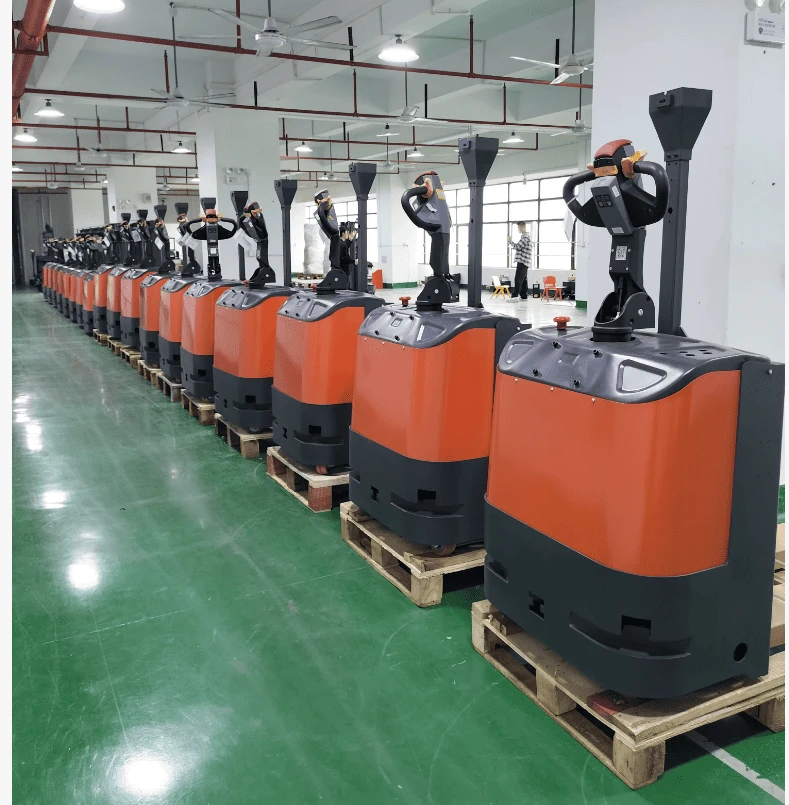
The Reeman 1.5T Autonomous Forklift is designed for ground-level pallet handling and material transportation, combining autonomous navigation, intelligent perception and flexible configurations to help businesses automate daily intralogistics operations.
With a maximum load capacity of 1,500 kg, the forklift can transport pallets and materials between different areas without requiring continuous manual forklift operation.
1.5-Ton Capacity for Ground-Level Pallet Transport
The Reeman 1.5T Autonomous Forklift is primarily designed for horizontal pallet transportation on the warehouse or factory floor.
Typical transportation routes can include:
Receiving Area → Storage Area → Production Area → Staging Area → Shipping Area
Instead of relying on operators to repeatedly drive forklifts between fixed locations, the autonomous forklift can perform predefined transportation tasks automatically.
This makes it suitable for repetitive material movement where pallets need to be transported over the same or changing routes throughout the day.
Typical applications include:
Pallet transportation
Raw material movement
Production line feeding
Finished goods transportation
Warehouse-to-production logistics
Loading and unloading area transfer
Internal material transportation
Factory intralogistics
Different Versions for Different Material Handling Requirements
Different facilities have different pallet sizes, operating environments and transportation requirements.
Reeman offers different autonomous forklift versions and configurations to meet different application scenarios.
Depending on the project, the forklift can be configured according to factors such as:
Required load capacity
Pallet dimensions
Fork dimensions
Fork lifting requirements
Navigation environment
Operating aisle and turning conditions
Safety requirements
Battery and charging requirements
Communication and dispatch requirements
This allows customers to select a suitable forklift configuration instead of using a one-size-fits-all solution.
Autonomous Navigation Without Fixed Floor Infrastructure
The Reeman autonomous forklift uses LiDAR-based SLAM navigation to understand and navigate through its working environment.
Unlike traditional AGV solutions that may rely on magnetic tape, magnetic markers or QR codes, SLAM-based navigation can reduce the need for fixed navigation infrastructure.
The forklift can build and use a map of the operating environment and follow designated transportation routes.
This provides greater flexibility for warehouses and factories where production layouts, storage areas or transportation routes may change over time.
Intelligent Perception and Obstacle Avoidance
Real-world industrial environments are constantly changing.
Workers, pallets, forklifts, carts and other objects may appear in the operating area.
The Reeman autonomous forklift combines LiDAR, vision and other sensing technologies to perceive its surroundings and support autonomous obstacle avoidance.
When an obstacle is detected along its route, the forklift can respond according to its programmed navigation and safety logic.
This enables autonomous forklifts to operate more effectively in environments where robots and people share the same working areas.
Designed for Repetitive Intralogistics Tasks
Many material handling tasks are repetitive but still require significant manpower.
For example, workers may need to repeatedly move pallets:
Warehouse → Production Line
Production Line → Staging Area
Staging Area → Warehouse
Receiving Area → Storage Area
These repetitive transportation tasks are well suited to autonomous forklift automation.
By taking over routine pallet transportation, the Reeman 1.5T Autonomous Forklift can help companies reduce repetitive manual handling and allow employees to focus on higher-value tasks.
Automatic Charging for Extended Operation
For facilities operating autonomous forklifts for extended periods, charging management is an important part of the overall solution.
The Reeman autonomous forklift can be equipped with an automatic charging solution, allowing the robot to return to its charging station when charging is required.
When combined with task scheduling and fleet management, automatic charging can help improve robot utilization and reduce manual charging operations.
Fleet Management for Multiple Autonomous Forklifts
For larger projects, multiple autonomous forklifts can work together through a fleet dispatch system.
The system can coordinate transportation tasks and assign jobs to available robots according to the configured workflow.
This is particularly useful when a facility needs several autonomous forklifts operating in the same environment.
Instead of managing each robot independently, the fleet system provides a more centralized approach to autonomous material transportation.
Companies can also expand their autonomous fleet as their automation requirements grow.
Flexible Integration with Existing Logistics Systems
Autonomous forklifts can be integrated into broader warehouse and factory logistics workflows.
Depending on the project requirements, Reeman solutions can support communication and task interaction with external systems such as WMS, MES or other warehouse and production management systems.
This allows transportation tasks to be generated according to actual production or warehouse requirements rather than requiring operators to manually control every movement.
A Flexible Solution for Warehouses and Factories
The Reeman 1.5T Autonomous Forklift is designed to provide a practical automation solution for ground-level material transportation.
Rather than focusing on a single industry or a specific warehouse layout, the platform can be adapted to different material handling applications through different versions and configurations.
It can be used in:
Warehouses
Manufacturing plants
Distribution centers
Logistics facilities
Automotive factories
Electronics manufacturing
Packaging facilities
Industrial production environments
The exact forklift configuration can be selected according to the customer's pallet, load, route and operating environment.
Key Highlights
1,500 kg maximum load capacity
Autonomous ground-level pallet transportation
Different versions for different applications
LiDAR-based SLAM navigation
Reduced dependence on fixed navigation infrastructure
LiDAR + vision-based environmental perception
Autonomous obstacle avoidance
Automatic charging option
Fleet dispatch and multi-robot coordination
Potential WMS/MES integration
Suitable for warehouses, factories and industrial facilities
Flexible configuration based on project requirements
From Manual Pallet Handling to Autonomous Intralogistics
Autonomous forklifts are transforming the way materials move inside warehouses and factories.
By automating repetitive ground-level pallet transportation, the Reeman 1.5T Autonomous Forklift provides a practical way to improve material flow while reducing dependence on manual forklift operations.
With different versions and configurations available, Reeman can provide autonomous forklift solutions according to the specific requirements of each project.
Reeman 1.5T Autonomous Forklift - intelligent, flexible and autonomous pallet transportation for modern intralogistics.