

Safety is one of the most important considerations when operating forklifts in warehouses, factories and logistics centers.
Traditional forklifts rely heavily on trained operators to control vehicle movement and respond to changing conditions. Autonomous forklifts introduce another approach by using sensors, software and automated navigation to monitor the surrounding environment.
But how exactly does safety differ between autonomous and manual forklifts?
Safety in Manual Forklift Operations
A manual forklift is controlled by a human operator. The operator must monitor the route, identify obstacles, control speed, maintain a safe distance from pedestrians and operate the lifting system.
Operator training is therefore an important part of forklift safety.
However, industrial environments can be complex. Warehouses may have pedestrians, other vehicles, narrow aisles, temporary obstacles and changing traffic conditions.
Fatigue, distraction and differences in operator behavior can also affect how a forklift is operated.
This does not mean manual forklifts are inherently unsafe. With appropriate training, procedures and workplace controls, manual forklifts can be used effectively in many industrial environments.
How Autonomous Forklifts Approach Safety
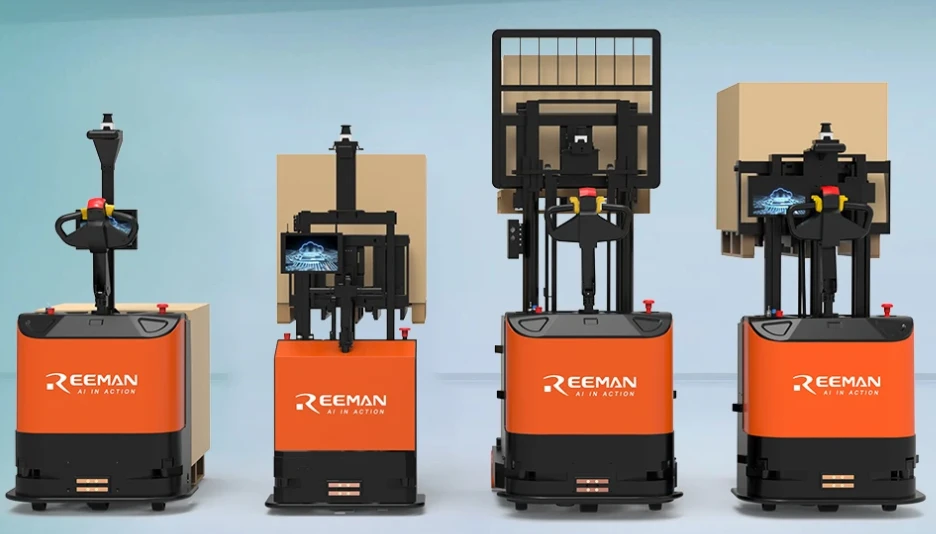
Autonomous forklifts use a combination of hardware and software to understand their surroundings.
Depending on the system design, this may include LiDAR, cameras, safety scanners, ultrasonic sensors and other detection technologies.
These systems can continuously monitor the area around the vehicle.
When an obstacle or person is detected, the forklift may slow down or stop according to its configured safety logic.
For example, if a pedestrian enters the planned travel path, the autonomous forklift can stop and wait for the path to become clear.
If the system determines that an alternative route is available, some autonomous solutions can also navigate around obstacles.
Predictable Routes and Safety Zones
Another advantage of autonomous operation is the ability to define transportation routes and safety areas in advance.
A factory can establish specific areas for pedestrian movement, robot travel, loading and unloading.
This can make it easier to organize traffic within the facility.
For repetitive transportation tasks, predefined routes can also help reduce unnecessary vehicle movement.
However, autonomous navigation does not eliminate the need for proper facility planning. A safe automated forklift system requires appropriate route design, obstacle detection, emergency-stop functions, traffic management and commissioning.
Human and Autonomous Systems Can Work Together
In many factories, the future may not be completely manual or completely autonomous.
Instead, manual forklifts and autonomous forklifts can operate within the same facility.
For example, autonomous forklifts can handle repetitive pallet transportation between production lines and warehouses, while manual forklifts can be used for loading trucks, handling unusual loads or performing tasks that require direct human judgment.
This hybrid approach allows companies to introduce automation gradually rather than changing their entire material-handling process at once.
What Should Companies Consider?
Before introducing an autonomous forklift, companies should evaluate the actual working environment.
Important factors include:
Pedestrian traffic
Aisle width
Floor conditions
Pallet dimensions
Load weight and height
Transportation frequency
Loading and unloading points
Emergency procedures
Network and system integration
Existing warehouse traffic
A detailed site assessment is usually an important step before deployment.
Ultimately, the difference between manual and autonomous forklifts is not simply who controls the steering wheel. Autonomous forklifts combine vehicle operation with sensing, navigation and software-based decision-making.
When properly designed and deployed, this technology can help companies create more structured and automated material-handling processes while maintaining appropriate safety controls.