

A manufacturing enterprise has successfully deployed an autonomous forklift system that enables fully automated material handling between two separate warehouses, covering a complete workflow from Warehouse A (indoor) → outdoor transportation route → Warehouse B (indoor).
This project represents a significant step forward in integrating indoor automation with outdoor logistics, addressing one of the most complex challenges in unmanned material handling: environment transition.
The operation scenario includes multiple technical difficulties such as dynamic lighting conditions, uneven outdoor pavement, GPS signal fluctuations, and precise docking requirements inside the receiving warehouse. To overcome these challenges, the system adopts a multi-sensor fusion architecture combining SLAM navigation, laser radar, and outdoor positioning assistance.
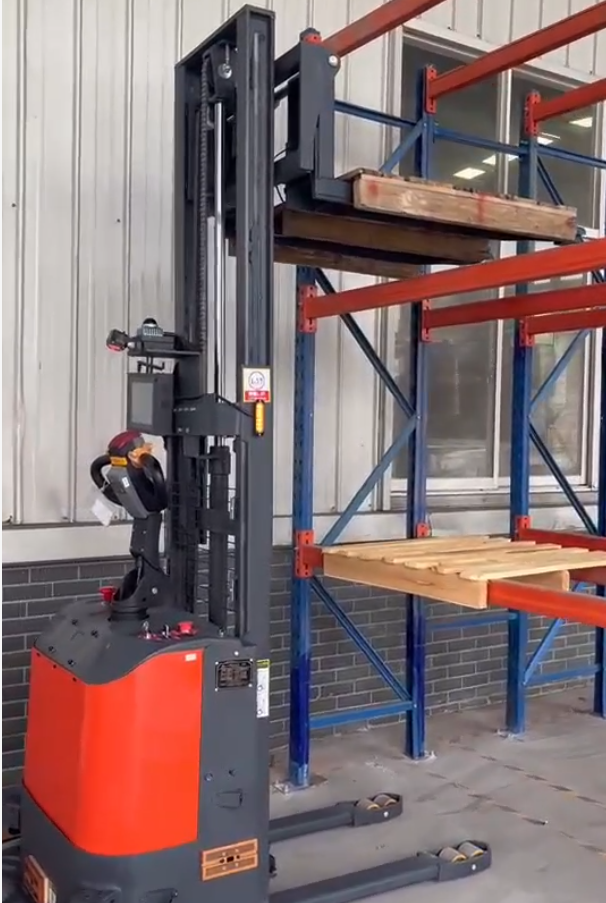

When exiting the warehouse, the autonomous forklift automatically transitions from indoor mapping mode to outdoor navigation mode. It maintains stable trajectory control across open yard areas and safely avoids pedestrians, vehicles, and other moving obstacles. Upon arrival at the destination warehouse, it re-enters indoor positioning mode and completes precise pallet delivery.
After implementation, the customer achieved approximately 50% reduction in manual handling labor costs and more than 45% improvement in logistics efficiency, while significantly improving operational safety and consistency.
This project demonstrates the feasibility of true end-to-end unmanned logistics across mixed environments.